Denver Hot Tub Maintenance Guide: Winter Care, Energy Costs & Water Care
Owning a hot tub in Denver can turn your backyard into a year-round retreat. There is something especially enjoyable about stepping into warm, bubbling water when Colorado temperatures drop and snow is on the ground. However, Denver’s climate also creates some unique considerations for hot tub owners.
Cold winter nights, dry air, temperature swings, snow, intense sunshine, and Colorado’s water conditions can all affect how a spa operates. Fortunately, hot tub maintenance does not have to be complicated. A few consistent habits can help protect your investment, control energy use, maintain clean water, and keep your hot tub ready whenever you want to use it.
This guide covers three of the most important areas of hot tub ownership in Denver, Colorado: winter care, energy-conscious operation, and basic water maintenance.
Using a Hot Tub During a Colorado Winter
Many Denver homeowners assume extremely cold weather means they need to close their hot tub for winter. In most cases, the opposite is true. Modern hot tubs are generally designed for year-round operation, and winter is often when owners enjoy them most.
Keeping the spa filled, heated, and circulating can also help protect plumbing from freezing. The important part is making sure the hot tub is functioning properly.
During freezing weather, check the spa regularly. Confirm that water is circulating normally and that the heater is maintaining the desired temperature. A problem that might be a minor inconvenience during summer can become much more serious when temperatures fall well below freezing.
Keep the Hot Tub Full
Water level becomes particularly important during a Denver winter. Evaporation, splashing, and regular use gradually lower the water level.
If it becomes too low, the spa may not circulate properly. Depending on the hot tub, low water can interfere with pumps, heaters, and other equipment.
Check the water level frequently and add water when necessary. If you need to add a significant amount during freezing weather, plan ahead so hoses and outdoor faucets do not freeze.
Clear Snow From the Cover
A quality hot tub cover is designed to handle outdoor conditions, but that does not mean heavy snow should be allowed to accumulate indefinitely.
After a significant Denver snowfall, carefully remove excessive snow from the cover. A soft broom can often accomplish this without damaging the cover material.
Avoid scraping ice from the cover with sharp objects. Damaging the exterior can allow moisture to enter the insulation, making the cover heavier and potentially reducing its insulating ability.
Your Hot Tub Cover Is an Energy-Saving Tool
One of the simplest ways to make a hot tub more energy efficient is also one of the easiest to overlook: maintain a high-quality, properly fitting cover.
The cover provides a thermal barrier between the heated spa water and Denver’s cold winter air. If the cover is damaged, waterlogged, poorly fitted, or warped, more heat can escape.
That means the heater may need to run more frequently to maintain the desired water temperature.
Inspect your cover periodically for cracking, sagging, damaged seams, and excessive weight. Check the fit around the spa as well. Gaps around the perimeter can allow heat to escape.
A deteriorated cover is not simply a cosmetic problem. Replacing it can be an important part of maintaining an energy-efficient hot tub in Colorado.
Should You Turn Down Your Hot Tub to Save Energy?
It seems logical that repeatedly lowering the temperature when you are not using the spa would dramatically reduce energy consumption. The answer, however, depends on how often you use your hot tub.
For a spa that is used frequently, maintaining a relatively consistent temperature is usually more convenient than making large temperature changes every day.
If you will be away for an extended period, lowering the temperature may reduce energy consumption. During winter, however, you should not simply shut off a filled hot tub to save electricity. Water remaining inside plumbing can freeze and potentially cause expensive damage.
If a hot tub will be completely shut down during freezing weather, it needs to be properly winterized according to the manufacturer's instructions.
How to Reduce Hot Tub Energy Use in Denver
Heating water represents a major portion of a hot tub's energy consumption, which makes retaining heat particularly important.
In addition to maintaining a good cover, Denver homeowners can improve efficiency by reducing unnecessary heat loss. Keep the cover closed whenever the hot tub is not being used. Avoid unnecessarily long periods with the cover removed, particularly during extremely cold or windy weather.
Wind exposure can contribute to heat loss. Depending on the backyard, fencing, landscaping, privacy panels, or other appropriate windbreaks may make the hot tub area more comfortable while reducing direct exposure to winter winds.
Hot tub condition matters, too. Modern spas may incorporate cabinet insulation, insulated plumbing areas, efficient pumps, programmable filtration cycles, and other features designed to reduce energy consumption.
If an older spa suddenly seems to be using considerably more electricity than usual, it may be worth checking the cover, insulation, heater, circulation system, and operating settings rather than simply assuming that cold weather is responsible.
Hot Tub Water Care Doesn't Need to Be Complicated
For many first-time hot tub owners, water chemistry sounds like the intimidating part. Terms such as alkalinity, sanitizer, pH, calcium hardness, shock, and total dissolved solids can make spa maintenance sound more like chemistry class than backyard relaxation.
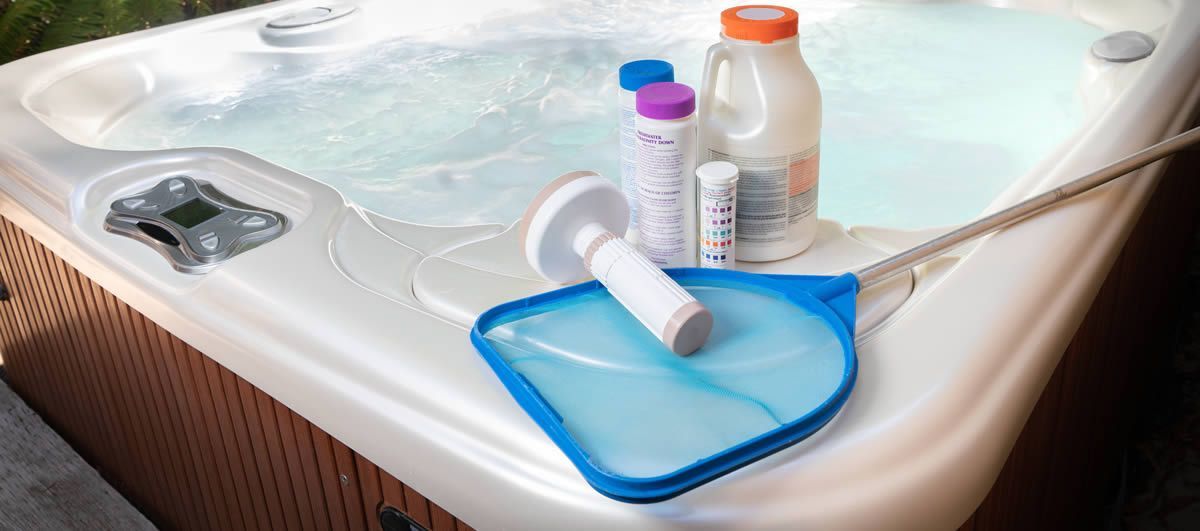
The basic concept is much simpler: test the water regularly, keep it balanced, maintain the correct sanitizer level, and respond to small problems before they become large ones.
Because a hot tub contains a relatively small volume of warm water, its chemistry can change faster than the water in a swimming pool.
Bathing loads also have a significant effect. Sweat, body oils, lotions, cosmetics, and other contaminants enter the water whenever people use the spa. This is one reason a hot tub that receives frequent use generally requires more attention than one used occasionally.
Understanding pH and Alkalinity
Two measurements every hot tub owner should become familiar with are pH and total alkalinity.
pH tells you how acidic or basic the water is. Water that falls outside the spa manufacturer's recommended range can contribute to problems including equipment corrosion, scaling, cloudy water, skin or eye discomfort, and reduced sanitizer effectiveness.
Total alkalinity helps stabilize pH. When alkalinity is significantly out of balance, maintaining a stable pH can become more difficult.
Rather than adding multiple chemicals at once, test the water and make measured adjustments according to your spa manufacturer's instructions and the directions supplied with your water-care products.
Sanitizer Keeps Hot Tub Water Safe and Clean
Warm water can provide favorable conditions for microorganisms, which is why maintaining an appropriate sanitizer residual is a fundamental part of hot tub ownership.
Chlorine and bromine are two common sanitizer systems used in residential spas. Other water-care systems may supplement sanitation, but owners should follow the requirements established by the hot tub and water-treatment manufacturers.
Test sanitizer levels regularly, especially after periods of heavier use.
One common mistake is assuming that clear water automatically means properly sanitized water. Appearance is helpful, but testing provides much better information about the actual condition of the spa.
Don't Forget the Hot Tub Filter
Your filter continuously helps remove particles and debris from circulating water. As the filter becomes dirty, water flow can decline and the spa's circulation system may need to work harder.
Remove and rinse the filter periodically according to the manufacturer's maintenance recommendations. Filters may also require deeper cleaning and eventual replacement.
If you notice reduced jet pressure, unusual circulation, persistent cloudy water, or filtration problems, the filter is one of the first components worth checking.
When Should You Drain and Refill a Hot Tub?
Hot tub water cannot remain fresh indefinitely.
Over time, dissolved minerals and substances introduced through chemicals and bathers accumulate in the water. Eventually, maintaining balanced, pleasant water becomes increasingly difficult.
The appropriate drain-and-refill interval varies according to spa size, frequency of use, number of bathers, water chemistry, and the manufacturer's recommendations.
Instead of relying exclusively on a fixed calendar schedule, pay attention to how easily the water can be maintained. Water that becomes difficult to balance, develops persistent cloudiness or foaming, or repeatedly creates water-quality problems may indicate that it is time for a fresh fill.
Colorado homeowners should be particularly thoughtful about draining during freezing weather. A winter drain-and-refill requires preparation so plumbing and equipment are not unnecessarily exposed to freezing temperatures.
Denver Water Conditions and Your Hot Tub
Local source water can affect the chemicals and adjustments needed after filling a spa. Mineral content, hardness, pH, and alkalinity can vary depending on the water source and location.
Testing fresh fill water provides a useful starting point.
Rather than assuming every hot tub requires exactly the same chemical routine, learn what your source water is bringing into the spa. This can make ongoing maintenance easier and help prevent unnecessary chemical additions.
A Simple Routine for Denver Hot Tub Owners
The easiest way to maintain a hot tub is to make small checks part of your normal routine instead of waiting until something goes wrong.
Check the water level and overall appearance regularly. Test sanitizer and water balance according to the requirements of your particular water-care system. Keep the filter clean, inspect the cover, and occasionally look around the equipment area for leaks or anything unusual.
During a Denver cold snap, give the spa additional attention. Verify that it has power, is heating correctly, and has normal circulation.
This becomes especially important if you leave town during winter. A hot tub that loses power or develops an equipment problem while nobody is home can be vulnerable to freezing.
What If You're Leaving Denver for a Winter Vacation?
Before leaving for an extended winter trip, prepare the hot tub rather than simply closing the cover and hoping for the best.
Balance and sanitize the water, clean or inspect the filter, verify the water level, check the cover, and confirm that the spa is operating normally.
For longer absences, follow the manufacturer's recommendations for vacation settings or winter operation.
If you intend to shut the spa down completely, proper winterization is essential. Simply draining the visible water is generally not sufficient because water can remain trapped inside pumps, heaters, jets, and plumbing lines.
Professional winterization may be worthwhile if you are unfamiliar with your hot tub's plumbing system.
Enjoying Your Hot Tub Year-Round in Denver
A Colorado winter is one of the best arguments for owning a hot tub. Cold evenings, snowy backyards, and warm spa water make a combination that homeowners in warmer climates rarely get to experience.
The key is understanding that winter hot tub ownership requires a little preparation.
Protect the spa from freezing, maintain the proper water level, keep the cover in good condition, and pay attention to circulation during severe cold. To manage energy consumption, focus on retaining heat instead of constantly changing temperatures or shutting the spa down.
For water care, consistency matters more than complexity. Test regularly, maintain proper sanitizer levels, keep pH and alkalinity balanced, clean the filter, and replace the water when necessary.
Following these fundamentals can help Denver hot tub owners spend less time troubleshooting and more time enjoying their spa.
Frequently Asked Questions About Hot Tubs in Denver
Can I use my hot tub all winter in Denver?
Yes. Many residential hot tubs are designed for year-round use, and winter is one of the most popular times to enjoy a spa. The hot tub should remain properly heated and circulating, and owners should pay particular attention to operation during periods of extreme cold.
Will a hot tub freeze during a Colorado winter?
A properly operating hot tub with heated, circulating water is much less susceptible to freezing. Problems can arise when a spa loses power, experiences equipment failure, has inadequate water, or is improperly shut down.
Does a hot tub use more electricity in winter?
Generally, colder outdoor temperatures increase the amount of heat a spa must replace. The actual impact depends on factors including insulation, cover condition, water temperature, weather, spa design, usage patterns, and local electricity rates.
Should I turn my hot tub off when I'm not using it?
Usually not for routine winter ownership. Completely shutting off a filled spa during freezing weather can create a freeze risk. If the hot tub needs to be shut down for an extended period, follow the manufacturer's winterization procedure.
How often should I test hot tub water?
Testing frequency depends on the sanitizer system, frequency of use, and manufacturer recommendations. Water should be checked regularly and more frequently when the spa receives heavy use.
How can I lower my hot tub's energy costs in Denver?
Start with heat retention. Maintain a high-quality, properly fitting cover, keep it closed when the spa is not in use, maintain the equipment and insulation, and avoid unnecessary temperature changes. If energy consumption suddenly increases, have the spa checked for problems rather than assuming Denver's weather is the only cause.
Better Care Means More Time in the Hot Tub
Owning a hot tub in the Denver Metro area does not need to involve complicated maintenance or excessive energy consumption. Understanding a few fundamentals can make a substantial difference.
Think of hot tub ownership as three connected responsibilities: protect the spa, conserve its heat, and maintain its water.
During Colorado winters, protecting the hot tub means preventing freeze-related problems and monitoring its operation. Energy-conscious ownership means keeping valuable heat inside the spa. Good water care means testing regularly and making small corrections before water-quality problems develop.
Master those three areas, and your hot tub can remain a comfortable, efficient, and inviting part of your Denver home throughout the year.